
Sunday, 15 November 2015

Saturday, 28 March 2015
Touch Radio 052: Richard Crow - Imaginary hospital radio
Imaginary Hospital Radio mimics and subverts conventional hospital radio and its aim to relieve its listeners/patients through the collaging and dissecting of the visceral and surgical sounds associated with illness and disease. The hospital’s unwanted sounds and noise provide an unexpected artistic source, as a kind of sonic tableau – an invisible operating theatre in which the sonic/audio auscultation/surgery occurs ‘live to ear’.
Richard Crow is an inter-disciplinary artist with a strong background in experimental audio work, photo based media, live performance and site-specific installation. He utilises sound and noise in a performative way, for its spatial and subjective qualities and above all for its psycho-physical implications for the listener. Over the past two decades his solo and collaborative site-specific installations and performances have consisted of highly conceptualised interventions into base materiality, investigations of alternative systems of organisation and research into a certain material decadence, most notably with the project The Institution of Rot.
Crow has collaborated, performed, and recorded with many leading musicians and sonic artists including Joe Banks, Adam Bohman, The Hafler Trio, Clive Graham, Michael Prime, Dean Roberts, Kaffe Matthews, Michael Morley, Sandoz Lab Technicians, & dy'na:mo.
Human Rights Films on Mubi
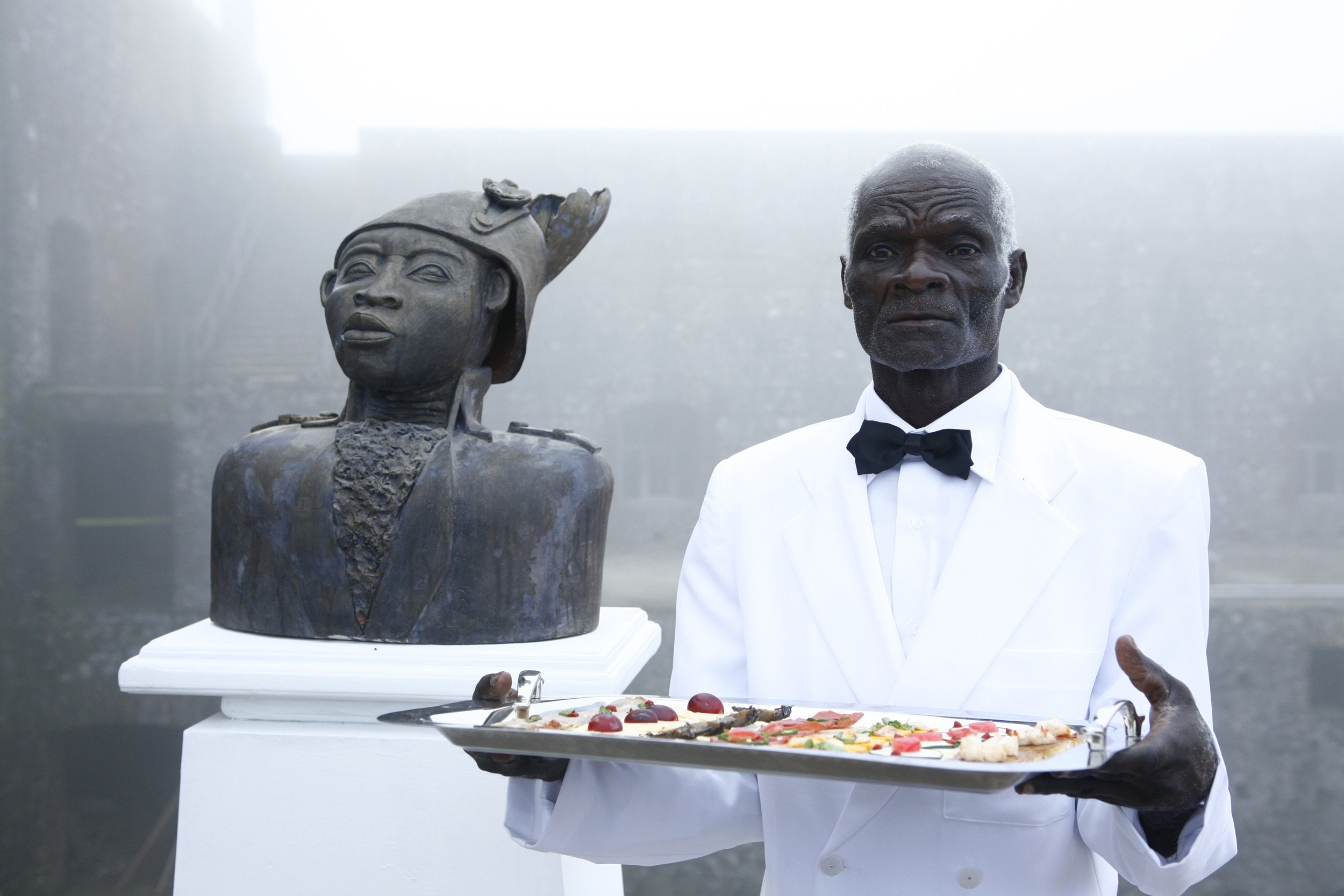
MOLOCH TROPICAL
directed by RAOUL PECK
Haiti, 2009
SYNOPSIS
Raoul Peck claims Alexander Sokurov’s Moloch as his own. Transplanting the Russian director’s unsettling mountain idyll between Adolf Hitler and Eva Braun from Bavaria to the green heat of Haiti, Peck tucks a searing critique of absolute power within the most elegant chamber drama.
THE SHELTER
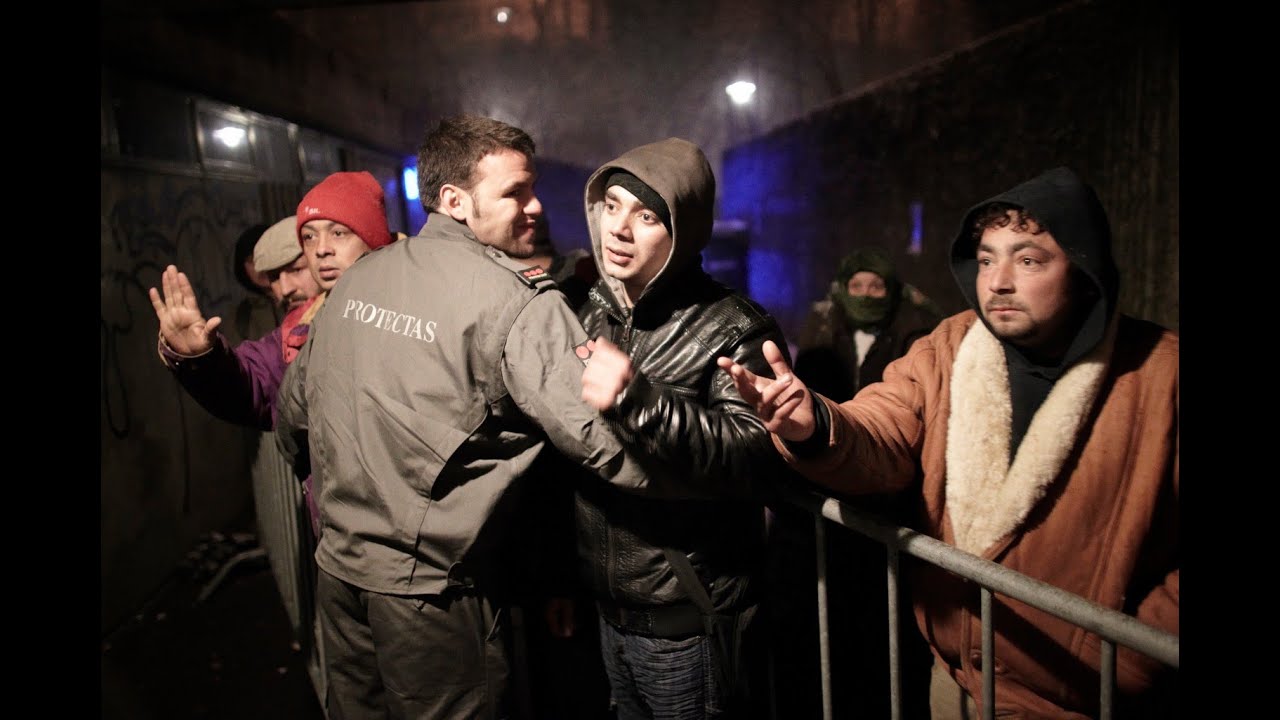
L’ABRI
directed by FERNAND MELGAR
Switzerland, 2014
SYNOPSIS
One winter in an emergency shelter for the homeless in Lausanne. Every night, the same ritual plays out at the door to this unassuming basement: a dramatic dash for the entrance, a ruckus sometimes occasioning violent altercations…
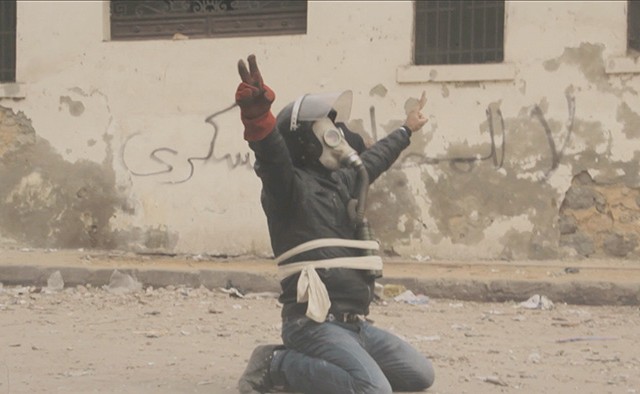
Egypt, 2013
SYNOPSIS
In February 2011, Egyptians—particularly young ones—showed the world the way people demanding change can drive an entire nation to transformation. The result was a profound movement toward democracy that is still evolving across the Arab world…
Tuesday, 17 March 2015
Saturday, 14 March 2015
Wage-labour and capital - Karl Marx - audiobook

Orignally written as a series of newspaper articles in 1847, Wage-Labour and Capital was intended to give a short overview, for popular consumption, of Marx’s central threories regarding the economic relationships between workers and capitalists. Recorded as an audiobook by LibriVox.
These theories outlined include the Marxian form of the Labour Theory of Value, which distinguishes “labour” from “labour-power”, and the Theory of Concentration of Capital, which states that capitalism tends towards the creation of monopolies and the disenfranchisement of the middle and working classes. The Theory of Alienation, which describes a dehumanising effect of capitalist production, in which an immediate social signifcance of labour to the worker is absent, is also touched upon. These theories were later elaborated in Volume 1 of Capital, published in 1867.
This edition of Wage-Labour and Capital, published in 1891, was edited and translated by Friedrich Engels, and remains one of the most widely read of Marx’s works.
Dead Drops
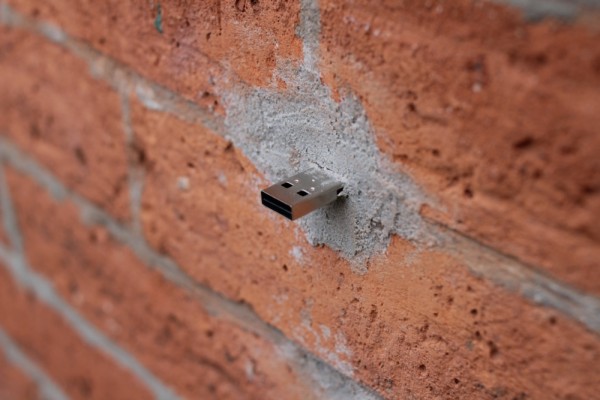
‘Dead Drops’ is an anonymous, offline, peer to peer file-sharing network in public space. USB flash drives are embedded into walls, buildings and curbs accessible to anybody in public space. Everyone is invited to drop or find files on a dead drop. Plug your laptop to a wall, house or pole to share your favorite files and data. Each dead drop is installed empty except a readme.txt file explaining the project. ‘Dead Drops’ is open to participation. If you want to install a dead drop in your city/neighborhood follow the ‘how to’ instructions and submit the location and pictures.
Tuesday, 3 February 2015
Sound Studies: Art, Experience, Politics
CENTRE FOR RESEARCH IN THE ARTS, SOCIAL SCIENCES AND HUMANITIES
The conceptual foundations of this conference are that sound is a vast assemblage of multisensory experiences and multivalent conceptualisations, and that sound is at once embodied, social and political. Sound Studies: Art, Experience, Politics invites researchers to consider not only the relationship between sound and broader sensory perception but also the social, political and economic implications of sound. The conference will address two interrelated themes: Sound, Society, Politics and Sound and the Body. Conference sessions will include papers on:
- Gendered Sounds
- Sound, Conflict & War
- Urban Phonography
- Sound, Embodiment & the Multisensory

Sound Studies: Art, Experience, Politics aims to draw attention to the international growth of sound studies, and to emphasise the innovative and potentially subversive nature of research that steps outside of the norms of academic investigation into visual and textual materials.
Michael Gallagher
Thinking through digital media, sound, music and geography

Decontextualising and recontextualising: making works that involve more than just sound
To put it another way, it’s easy enough to make field recordings, but what then? Where are they going to be played back, who (if anyone) will be listening, and what kind of effects do we want the playback situation to create? This is largely a question of geography, about the kinds of social and physical spaces in which environmental audio works are presented.
If we pursue sound as sound-in-itself, to the exclusion of other aspects of life, ultimately this takes us towards an acousmatic approach which “strips sound of any visual referent, linguistic description, or direct narrative, relying instead on the qualities of sound itself, its manipulation and construction.” (LeBelle, 2006: 209). But however much context is removed – even if the audience is blindfold, a method favoured by sound artist Francisco Lopez – there is always a (multi-sensory) recontextualisation on playback. Life always involves more than just sound.

About Michael Gallagher
I’m a social and cultural geographer based at the University of Glasgow in Scotland. I also do sound recording and music production. Much of my work is experimental in method, using techniques borrowed from sound art, digital media production, soundscape composition, documentary photography, film and radio.
Critical analysis
Sound, sound art and digital media are sometimes celebrated as cool, exciting and interesting, as needing no further justification or explanation. For me, the academic’s role is to set such claims to one side and ask more incisive questions about what these things do: what is the function of this sound, in this place? This work of sound art – what is it doing? When we use networked digital media, what practices are involved? What spaces are being opened up – and what spaces are being closed down?
To answer such questions requires thinking critically about both the physical aspects, the forces and materials involved, and the social aspects, how sound and audio relate to the wider historical, political and economic context. It requires careful attention to particular instances, rather than sweeping generalisations – as though sound or digital media were just one thing, the same everywhere. It also requires a multi-sensory sensibility, since we live in a multi-sensory world. Sound art always involves more than just sound. Rather than privileging sound, hearing or particular kinds of media, the task here is to think about interconnections: how does sound relate to light, scent, heat? How does hearing work with, or against, seeing, smelling, touching? How are audio media reworked through their use in cinema, television, mobile telephony and the internet?
The Field Recordist, by Lawrence Barker
Best heard with headphones to appreciate the full stereo field.
This film is a personal reflection of my own passion for audio field recording over the past 45 years.

“Audio field recordings act as a powerful trigger, transporting me back to the original place they were captured………they are more powerful than any image captured on camera and even surpass those caught on video – they are quite magical!”
Lawrence Barker
“Audio field recordings act as a powerful trigger, transporting me back to the original place they were captured………they are more powerful than any image captured on camera and even surpass those caught on video – they are quite magical!”
Lawrence Barker
Maft Sai - Isan Dancehall
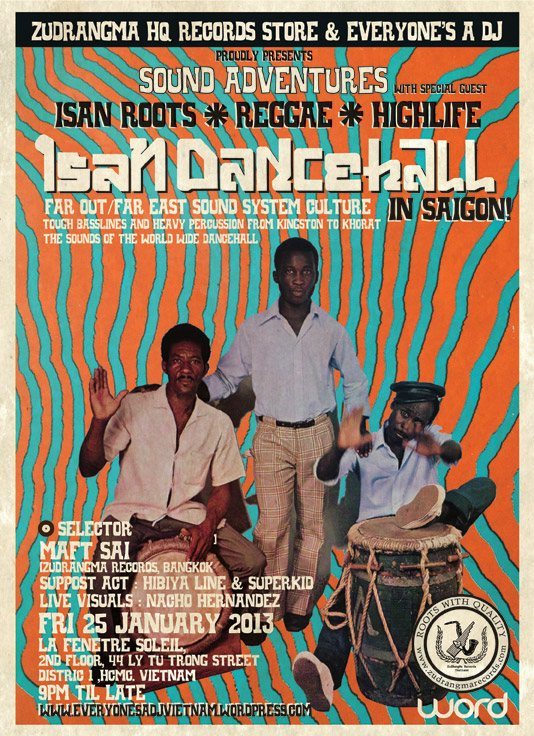
He has been collecting records and DJing for over 12 years, spinning an eclectic mixture of Roots Luk He has also taken his showcases further afield, to Vietnam, Singapore, Cambodian, Japan, France, Switzerland, Austria, UK, Germany and the US. He has also appeared as a dj on radio shows such as: “Beat in Space Radio Show” (New York), “Dublab Radio” (L.A.), “Pirates Choice Radio” (Osaka) “Northwave Radio” (Hokkaido) and many more.
He has also co-curated collections of left-field Thai music with Chris Menist for Finders Keepers Records “Thai? Dai! The Heavier Side Of The Luk Thung Underground”, for Soundway Records “The Sound Of Siam: Leftfield Luk Thung, Jazz & Molam 1964 – 1975 and ‘Diew Sor Isan : The North East Thai Violin of Thonghuad Faited’ for Em Records. Maft and Chris also run the record label ‘Paradise Bangkok’, which reissues underground vinyl gems from around the world.
Interview: Christopher Kirkley
Sahel Sounds, and Guerrilla Ethnomusicology
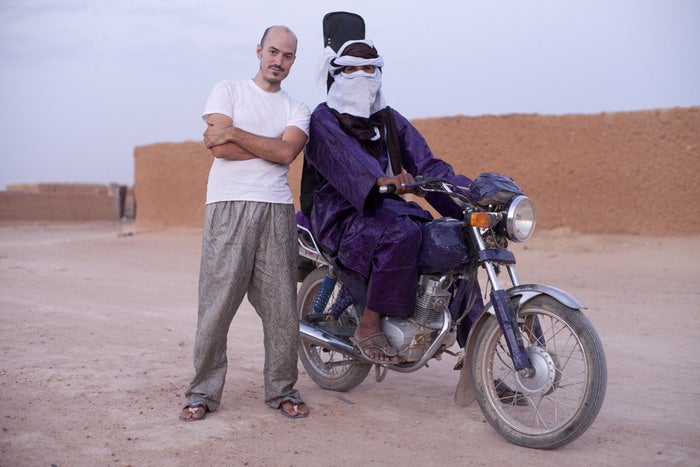
Christopher Kirkley is an archivist, artist, curator, and occasional DJ who runs the project Sahel Sounds. His work examines contemporary popular musics in an evolving technological landscape in the Sahara and Sahel regions of West Africa, from the interplay of localized traditions with transglobal influences to new media models of cultural transmission.
Sahel Sounds began as a blog in 2009 to share field recordings and has evolved into a record label, perhaps best known for its compilation Music from Saharan Cellphones. The blog continues as a platform to explore arts and music of the region through nontraditional ethnographic fieldwork. Currently, Chris is fundraising for the production of what may be the first-ever Tuareg language fiction film, Akounak Tedalat Taha Tazoughai (“Rain the Color of Blue with a Little Red in It”)—an homage to Purple Rain and The Harder They Come, and drawing on the experimental filmmaking of Poverty Row, Italian Neo-Realism, and Jean Rouch—which aims to provide an alternative to the dominant narrative of contemporary Tuareg music-as-rebellion by dramatizing the music scene in Agadez, Niger.
We recently discussed some of his projects, the relationship of his work to academic ethnography, and how digital music is being archived in the Sahel. Excerpts from our conversation are reproduced below.
The Sound of Space
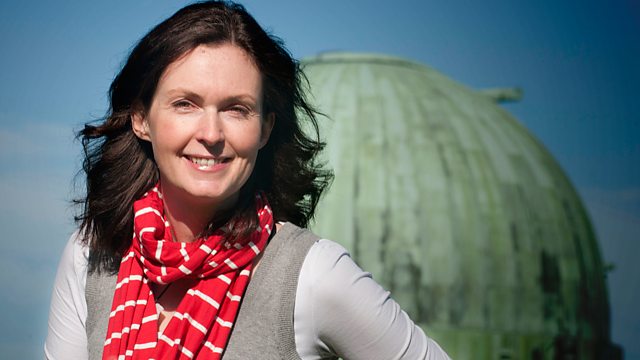
The previously silent world of outer space is changing. In this audio tour around the Universe, Dr Lucie Green explores the sounds of space.
Some sounds have been recorded by microphones on-board interplanetary spacecraft. Others have been detected by telescopes and sped up until their frequency is tuned to our ears. The rest are sonified X-rays, space plasma or radio waves that reveal tantalising secrets about the universe that our eyes cannot see.
Everyone can recall the sound of the singing comet - a symphony created using measurements from the Rosetta mission. But many other sounds have been created from space data, from lightning on Jupiter to vibrations inside the Sun. From spinning pulsars to black holes and gamma ray bursts, outside our Solar System space becomes even stranger.
Monday, 2 February 2015
Interviews with wildlife sound recordists
This collection comprises a growing number of interviews with British wildlife sound recordists. From scientists to hobbyists, these conversations cover a variety of topics such as early influences, recording experiences, personal approaches, academic research, changing technologies, the importance of listening and personal relationships with nature. Many interviewees are members of the Wildlife Sound Recording Society, an international organisation dedicated to the recording of wildlife and environmental sounds.

Thursday, 29 January 2015
Helmand's Golden Age
Afghanistan once faced the future with confidence.
Caught here on film, it's an era the world has forgotten.
When a young American engineer Glenn Foster arrived in Afghanistan, he found a country rushing towards the future. The people are “exploding out into the open,” he said later.

It was 1952. Afghanistan was still a kingdom, and King Zahir had hired foreign technicians - including American engineers and construction specialists - to help build the new post-war Afghanistan. Post-World War Two, that is.
Afghanistan faced the world with confidence. Revenue from its main export, the karakul lambskin, had grown steadily as the furriers, milliners and clothiers of a stricken Europe decamped to the United States. Although poor and undeveloped, Afghanistan in the late 1940s held $100m dollars in reserves.
Glenn Foster carried with him a 16mm camera, and in the seven years that he was to live and work in Afghanistan he shot hour upon hour of film - of Afghan life and landscapes, of engineering projects, of Christmas parties in the American community. And in those hours of film he captured the country in a hopeful moment of its history that is all but forgotten.

Kitch!

June 1948. The Empire Windrush docks at Tilbury carrying 492 West Indian "citizens of the British Empire". Newsreel footage captures forever the suited new arrivals waiting to alight. As the reporter introduces one young man as "their spokesman", a gently smiling Aldwyn Roberts sings a Calypso he wrote on the the voyage, 'London is the place for me, London, this lovely city...'
Aldwyn Roberts was 26 years old and already well known in Trinidad as Calypso star Lord Kitchener. He lived in England for almost 15 years, married a girl in Manchester, was celebrated by glamorous upper class English society and became the voice of a generation of Caribbean immigrants far from home.
Poet and musician Anthony Joseph also left Trinidad for London in his twenties and has always felt a powerful connection to Kitch. He spoke to him just once, when he saw Kitch standing alone for a moment at Carnival in Trinidad. Now, fifteen years after Kitchener's death Anthony Joseph tries to get to the heart of the man behind the famous footage.
Harry Smith issues his famous Anthologyhttp://i.guim.co.uk/static/w-620/h--/q-95/sys-images/Music/Pix/pictures/2011/6/21/1308666406781/Harry-Smith-007.jpg
1952: Number 13 in our series of the 50 key events in the history of world and folk music

Zudrangma Records - Thailand

Check out Zudrangma Radio Station by clicking on the image above!
We are specialised in rare and collectible vinyl records in the vintage sounds of Luk Thung and Molam, alongside music from Jamaica, West Africa and the world.
The catalogue of records we offer include rare pieces but also some more classic titles with a general emphasis on offering records that we like and that we think you will like too.

Low Tech Sensors & Actuators

This report describes the results of a collaborative research project to develop a suite of low-tech sensors and actuators that might be useful for artists and architects working with interactive environments. With this project we hoped to consolidate a number of different approaches we had found ourselves taking in our own work and develop both a "kit-of-parts" and a more conceptual framework for producing such works.
We had often found during design development in the past that ideas had to be prototyped both quickly and cheaply; it was more important that such prototypes were functionally efficient rather than aesthetically perfect. Like many other artists and architects working in the field of interactive environments, in cutting costs and development time we often had to resort to a "low-tech" approach, rewiring keyboards to get pressure-pad input into computers, or using the monitor with light sensors and relays to get physical output from computers. We also found ourselves taking apart and reassembling (i.e. "hacking") bits of technology that were not connected to computers (for example the flashing stickers attached to mobile phones could be used to trigger light sensors when a phone call arrived).
Link to pdf...
Subscribe to:
Posts (Atom)